Foundation Classes
How to Start UPSC Preparation for 2028? A Beginner’s Roadmap











Every UPSC preparation journey begins with the same few questions. How tough is the exam, how much time does it really need, and where does a beginner even start? For aspirants aiming at CSE 2028, there is still enough runway to build a strong base, provided the first few months go into the right things.
We put these questions to five VisionIAS faculty members in a panel discussion. Watch the full session here.

[Watch: How to Start UPSC Preparation for 2028 by VisionIAS Faculty].
This roadmap goes a step further and lays out how a beginner can plan the journey, from the first week to the final stretch.
Understand the exam before you begin
The Civil Services Examination is long rather than impossible. The questions are pitched at graduation level; what makes the exam demanding is the sheer breadth of the syllabus and the need to stay consistent for a year or more. Knowing what each stage is really testing makes it easier to plan everything that follows.
| Stage | What it tests | Pattern at a glance |
| Prelims | Wide coverage and observation, in objective format | GS Paper I (200 marks) and CSAT (200 marks, qualifying at 33%). Marks are not counted in the final merit |
| Mains | Analysis, understanding and the ability to present an argument | 9 papers: 2 qualifying language papers, Essay, 4 GS papers and 2 Optional papers. 1,750 marks count towards the rank |
| Interview | Personality, clarity of thought and how you present it | 275 marks |
Prelims is a gateway: it decides who gets to write Mains, but Mains and the Interview decide the rank. That is exactly why the three stages should not be treated as three separate exams.
A topic like federalism or climate change shows up as a fact-based MCQ in Prelims, as a 10 or 15-mark analytical question in Mains, and as a point of view in the Interview. Aspirants who prepare Prelims first and “get serious about Mains later” end up learning every topic twice.
The smarter approach is to learn each topic once, with all three stages in mind. This is also how the VisionIAS GS Foundation Course is built: after every class, students get MCQs to test Prelims readiness along with descriptive questions on the same topic for Mains, so every topic is seen through both lenses from day one.
The Personality Development Programme that comes with the course then carries the same thinking into the Interview stage.
When to start: as soon as you decide
There is no perfect month to begin. The right time is when you have decided that UPSC is your goal, whether you are in the final year of graduation, a recent graduate or a working professional. What matters is where you are when the exam arrives, not how early you started.
A realistic window for most beginners is 12 to 18 months of regular preparation. If you begin early, you will have roughly 16 to 18 months before a Prelims that is typically held between late May and mid-June (UPSC announces the exact date through its annual calendar). That is enough time to cover the syllabus, revise it more than once and take plenty of tests.
The first few weeks are where many beginners go wrong, usually by planning too much. Start with a small, achievable set of goals, meet them, and build confidence from there. Expect the journey to have highs and lows rather than a straight upward line, and plan for that from the start.
| Phase | Timeline | Focus |
| Orientation | Month 1 | Read the syllabus and previous year papers, choose one newspaper, settle a weekly routine |
| Foundation | Months 2 to 10 | Learn the core GS subjects from the basics, build notes, start daily answer practice and current affairs |
| Consolidation | Months 11 to 14 | Revise subjects, take full-length tests, fix weak areas, finalise the optional if you are taking one |
| Prelims sprint | Months 15 to 17 | Mock tests, CSAT practice, current affairs revision |
| Mains and Interview | After Prelims | Intensive answer writing and Essay practice, then personality test preparation |
A structured 12-month programme like the VisionIAS GS Foundation Course 2028 is designed to carry you through the learning-heavy part of this timeline. Classes run for 2.5 to 3 hours, five to six days a week, covering all four GS Mains papers, GS Prelims, CSAT and Essay, so that the months close to Prelims are left for revision and mock tests rather than for catching up on syllabus.
Build the base: syllabus, previous year papers and NCERTs
Before opening any book, spend a few days with the official syllabus and the last ten years of Prelims and Mains papers. This tells you what UPSC actually asks, how deep it goes and which areas carry weight. It also makes the choice of Optional subject much easier later, because you will have seen the syllabus and the papers rather than guessed at them.
A ten-year trend analysis of Prelims papers is one of the most useful things a beginner can do in the first month, and it is part of the opening phase of the Classroom Mentoring Program that runs alongside the VisionIAS Foundation Course.
Next comes the base. UPSC does not expect specialist knowledge. It expects clear concepts across many subjects, and that is what NCERTs are for. They are written for first-time learners, which is exactly what most aspirants are in subjects like Economy, Polity or Science and Technology. Even an engineer or a science graduate should not assume an advantage: each subject has to be learnt from scratch.
A few habits make this stage easier:
• Treat NCERTs as the starting point for each subject, not as a box to tick. Read for concepts and connections rather than for facts to memorise.
• Keep the resource list short. One good source per topic, revised several times, beats five sources read once.
• Revise the previous class before starting the next one. Revision here means asking yourself what you understood and how it connects, not rereading the notes.
• Do not skip subjects you find uncomfortable. Economy, for instance, is where many aspirants lose marks, and where toppers regularly score well.
If you are new to a subject and a large classroom feels like a steep start, a short bridge helps. VisionIAS offers a Pre-Foundation course for aspirants who want to get comfortable with NCERT and basic concepts before joining the main classroom.

[Explore, VisionIAS GS Foundation Course 2028 including Pre-foundation program]
The Foundation Course itself assumes no prior background. Each subject is taught from the basics to the complex, by faculty with 10 or more years of teaching experience, with priority given to subjects that carry more weight in the exam. The aim is that you are not left searching for material outside the class.
Make current affairs a daily habit from the first week
Current affairs is part of the syllabus at every stage: Prelims, Mains and the Interview. It also cannot be crammed at the end, which is why it belongs in your routine from the very beginning.
Start with one newspaper, the one you are most comfortable reading. Four newspapers on day one only build a pile you never open. In the first few weeks you may follow barely a third of what you read, because Economy, Science and Technology or Culture may be new to you. That is normal, and it improves with every week.
A useful way to think about newspaper reading is in three phases:
1. Familiarise. Build the habit of reading daily, without worrying about how much you understand.
2. Connect. Link news items to the syllabus. Ask which subject and topic a story belongs to, and read the editorials to see how an issue is argued.
3. Revise. Keep short notes you can revisit. A source you cannot revise is of little use, however many you read.
A newspaper tells you what happened. It does not tell you what UPSC would ask about it. That gap is filled by a current affairs resource built around the exam, which shows the part of a news item that matters for the syllabus. This is the idea behind the current affairs support in the VisionIAS Foundation Course, where each resource has a distinct job:
| Resource | What it is for |
| News Today | Daily current affairs compiled from sources such as The Hindu, PIB, Yojana and government documents, to keep the daily habit going |
| MCAR (Monthly Current Affairs Revision) | Monthly revision classes so nothing piles up |
| PT 365 | One year of current affairs organised for Prelims |
| Mains 365 | One year of current affairs organised for GS Mains answers |
| Digital Current Affairs and Vision Intelligence | Smart notes, daily summaries, MCQ quizzes and AI-assisted query resolution for quick clarity |
The rule that holds for all of them is simple: choose a small set of resources and make sure you can revise them.
Start answer writing early, but in stages
Answer writing is a skill most aspirants have never practised. Most of us have never been taught to answer according to what the question demands rather than according to what we know. So your first answers will be weak, and that is part of the process. The aim is steady improvement over months, not impressive answers in the first month.
Two ideas help immediately.
- First, every question has a demand (what it wants you to cover) and a tone (how it wants you to treat it). A question on the monsoon may demand its mechanism, while the directive word, such as explain, discuss or critically examine, decides how you present it.
- Second, the strongest answers are multi-dimensional. The monsoon is not only geography: it connects to agriculture and the economy, the environment, water diplomacy and culture. Bringing in these links within 150 or 250 words is what lifts an answer from average to good.

A practical way to build the skill is in three stages:
1. Begin with the basics. After reading an NCERT chapter, frame answers to its end-of-chapter questions in your head or in a line or two. Good introductions come from strong basics, and good conclusions can draw on current affairs or the Sustainable Development Goals.
2. Practise what you learnt each day. A question or two after every class tests whether you understood the topic, not whether you can copy it.
3. Move to tests. This is where you learn to write within time, link dimensions and respond to feedback.
This three-stage pattern is built into the VisionIAS Foundation Course. Daily assignments follow each class, weekly mini tests and monthly tests keep the practice regular, and the All India Test Series, which is opted for by 2 out of 3 selected candidates, brings the exam environment closer.
The VisionIAS Post Test Analysis then points to specific corrections, so each test leads to a clearer next step. Within the Classroom Mentoring Program, answer writing is introduced in the first phase, followed by workshops, feedback on written assignments and lessons from toppers’ copies in the next.
[Download High Scorer Topper Copy]
Starting from different places: student, full-time aspirant or working professional
The roadmap stays the same, but how you fit it into your life changes.
College students. Recent toppers include many fresh graduates, so the final year or even earlier is a reasonable time to begin. Keep the goals small and let the habits form: a newspaper, a subject at a time, a few answers a week. Do not let UPSC cost you your degree.
Those preparing full-time. If you are leaving a job or switching careers to prepare, weigh the opportunity cost first. The exam is long and the number of attempts you will need is not predictable. Read the syllabus and a few question papers before you commit, so that the decision rests on the exam as it is.
Working professionals. It can be done, but it asks for sacrifices. After a full day at work, the hours left for study are limited, and they usually come out of your social time and weekends. A fixed daily slot, however short, works better than occasional long sessions. Live-online classes with recorded lectures are especially useful here.
[Watch: How to Prepare for UPSC with a Full-Time Job? | A Realistic Preparation Plan | UPSC 2028-29]
The VisionIAS Foundation Course is available in both classroom and live-online modes, and recorded videos are uploaded to the student platform within 24 to 48 hours of the class, so a missed lecture does not become a missed topic.
Whichever group you belong to, check UPSC’s official notification for eligibility. For the General category, candidates must be between 21 and 32 years of age and have six attempts, with relaxations for OBC, SC/ST, EWS and PwBD candidates as notified by UPSC.
Stay consistent: discipline, rest and the right support
UPSC is a marathon, and a marathon is won on consistency, not on sprints. Two things matter more than the number of hours you log.
- The first is regularity: attending classes, reading the newspaper and revising every single day, because what you skip today usually returns as a backlog tomorrow. Long breaks around festivals and family events are the most common way beginners fall behind.
- The second is focus: a few hours with the phone switched off are worth more than a full day of half-attention.
Consistency does not mean giving up your life. Aspirants who treat every hour away from the desk as guilt tend to burn out early. Keep time for hobbies, exercise and friends, and use conversations with fellow aspirants for revision rather than for worry. Think of the preparation as a long game you want to get better at, not a punishment.
Over a long preparation there will be weeks when scores dip and motivation drops. This is when personal guidance matters, because a mentor can see your pattern and correct the course early.
In the VisionIAS Foundation Course, the Classroom Mentoring Program does this job. Every student has a personal mentor for one-to-one sessions, supported by group sessions, continuous tracking of test performance and a SWOT analysis at each phase. Dedicated counselling sessions help with stress and exam pressure, because staying calm is part of the preparation, not a separate matter.
Common mistakes beginners should avoid
- Preparing the stages separately. Leaving Mains and Interview for “after Prelims” means relearning everything later.
- Collecting too many resources. Too many sources and frequent plan changes make the exam look more complicated than it is.
- Starting with an ambitious timetable. A plan you cannot keep for two weeks is not a plan. Start small and scale up.
- Postponing newspaper reading. One missed day becomes three, and topics you skipped may be the ones that appear in the paper.
- Waiting to write answers until the syllabus is finished. Begin simply and let the difficulty grow with your knowledge.
- Ignoring revision. A topic you have read once is a topic you have not yet learnt.
- Taking long, unplanned breaks. Regular classes and regular revision are what keep the momentum going.
Your first 30 days
1. Read the UPSC syllabus fully, once, and go through the last ten years of Prelims papers.
2. Pick one newspaper and read it every day, even if you follow only part of it.
3. Choose one subject to begin with and read its NCERT chapters for concepts.
4. Write a short answer after every study session, and do not worry about the quality yet.
5. Fix a daily study slot and a weekly revision slot, and protect both.
6. Decide how you will get guidance: self-study with a mentor, or a structured classroom or live-online programme.
Where a Foundation Course fits in your preparation
Many aspirants prepare on their own but the first year is where structure helps most. A beginner has to decide what to study, in what order, how deep to go and how to know whether it is working, all at once. A good foundation programme answers those questions for you, so that your energy goes into learning rather than planning.
That is the thinking behind the VisionIAS GS Foundation Course 2028. It starts from scratch, teaches Prelims and Mains together, builds answer writing and current affairs into the weekly routine, and gives each student a mentor to keep the preparation on track.
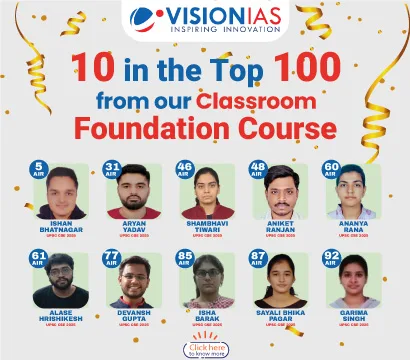
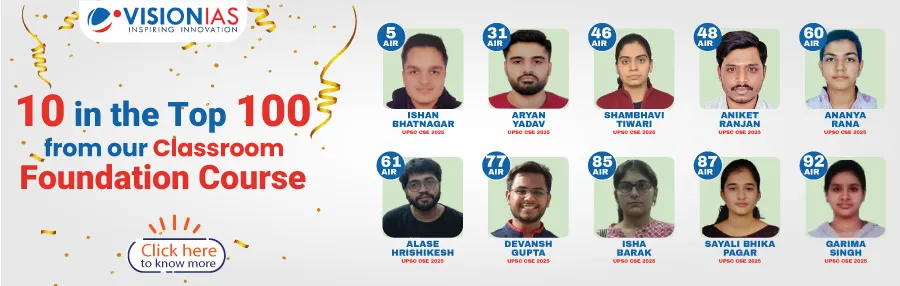
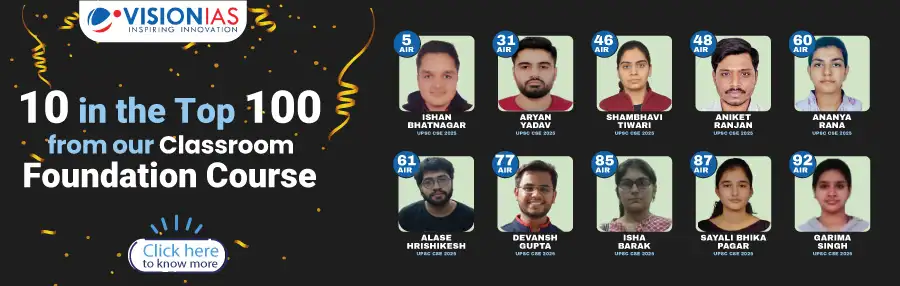
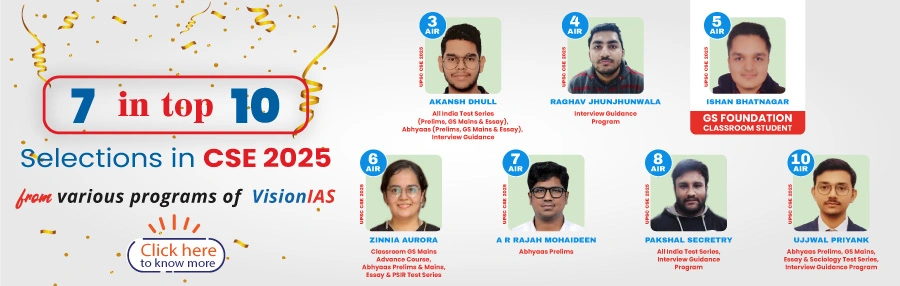
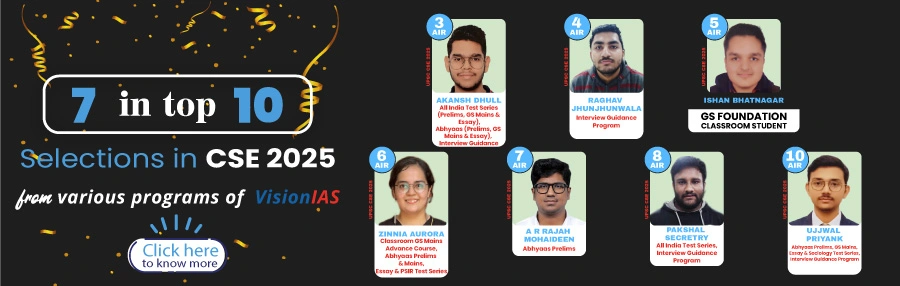
The results of past batches reflect this approach: 10 selections in the top 100 of CSE 2025 came from the GS Foundation Classroom Course, including All India Rank 5.

If you are planning to begin your UPSC preparation for 2028, the next step is to see the course in detail and speak to the academic counsellor..
[Explore, VisionIAS GS Foundation Course 2028]
FAQs: UPSC Preparation for 2028
1. When should I start UPSC preparation for 2028?
As soon as you decide to attempt the exam. A realistic window for UPSC preparation for 2028 is 12 to 18 months of regular study, so beginning early leaves comfortable time for learning, revision and tests.
2. How should a beginner start UPSC preparation for 2028?
Begin with the syllabus and the last ten years of papers, then build a base with NCERTs, read one newspaper daily and write short answers from the start. This is the simplest way to start UPSC preparation for 2028 without feeling overwhelmed.
3. Can I start UPSC preparation for 2028 while in college?
Yes. Many successful candidates began during graduation. Keep your goals small, protect your academics and build habits like newspaper reading and weekly revision, so that UPSC preparation for 2028 becomes a steady routine rather than a burden.
4. Can working professionals manage UPSC preparation for 2028?
Yes, with a fixed daily study slot, a realistic plan and some sacrifice of free time. Live-online classes and recorded lectures help working aspirants follow UPSC preparation for 2028 at their own pace.
5. How many newspapers do I need for UPSC preparation for 2028?
One is enough. Choose the newspaper you find most comfortable and read it daily, then support it with an exam-oriented current affairs resource. For UPSC preparation for 2028, the ability to revise what you read matters more than the number of sources.
6. When should I start answer writing in UPSC preparation for 2028?
From the beginning, but in stages: frame answers to NCERT questions first, practise daily questions after learning each topic, then move to test series. Early answers will be basic, and that is expected in UPSC preparation for 2028.
7. Who can appear for the UPSC Civil Services Examination in 2028?
Candidates must be graduates and meet the age and attempt limits in UPSC’s notification. For the General category, the age range is 21 to 32 years with six attempts, and relaxations apply to other categories. Check the official notice before you begin UPSC preparation